🎧 Sound in Education in Ten Steps
000. Practicing Attentive Listening
We learn to listen carefully and consciously, cultivating aural maturity and sensitivity to the world of sounds around us.
100. Understanding the Value of Sound Study
We discover how studying and classifying sounds helps us understand the world, communication, and learning itself.
200. Developing Sonic Literacy and Numeracy
We explore how measurement, patterns, and definitions form the foundation of sound literacy and sonic numeracy.
300. Learning to Produce and Activate Sound
We acquire practical techniques to create, manipulate, and trigger sound as a form of acoustic activation in our environment.
400. From Music to Sound
We study the cultural shift “from music to sound,” discovering how our civilization listens, composes, and expresses itself today.
500. Exploring Sound, Environment, and Humanity
We delve into the ecologies of sound, understanding the deep relationship between sound, nature, and human presence.
600. Using Sound Technologies Critically and Creatively
We engage thoughtfully with electronic and digital tools, using them to expand our creative and educational sound practices.
700. Experiencing the Polis of Sounds
We investigate how sound shapes societies and cultures, exploring its social, political, and civic dimensions.
800. Creating with Sound
We compose sound creations and sound artworks, transforming ideas and emotions into artistic acoustic expression.
900. Expanding Knowledge Through Interdisciplinary Collaboration
We extend our understanding of sound through the dialogue of sciences, arts, and technologies in shared educational projects.
🎧 Examples and Activities for each step
000. Practicing Attentive Listening
We learn to listen carefully and consciously, cultivating aural maturity and sensitivity to the world of sounds around us.
Sound Hunt:
Students close their eyes for one minute and write down every sound they can hear inside and outside the classroom. Then they share and classify the sounds (natural, human, mechanical, etc.). They compare their results and repeat the activity to notice sounds they missed before. Finally, they post a large paper on the wall with the words of the sounds they discovered, labeled “Our Classroom Soundscape.”
Silent Minutes Challenge:
The whole class remains silent for a few minutes, as defined by the teacher. During this time, students try to relax and clear their senses for the rest of the school day. Afterwards, they discuss: Did they succeed in relaxing, or were they more focused on staying silent and hearing small noises around them? The activity is repeated after a few days — has their listening maturity improved?
100. Understanding the Value of Sound Study
We discover how studying and classifying sounds helps us understand the world, communication, and learning itself.
Sound Journal:
Each student keeps a short daily record of the most interesting sound they heard that day and why it caught their attention. This can be done over a few days, a weekend, or a short vacation period. Afterwards, the class discusses the value of sound experiences and how we can live a richer, more mindful soundscape life.
Sound Categories Game:
The teacher plays different recorded sounds, and students group them according to self-invented criteria (source, tone, emotional effect, etc.). Then they discuss: Why did we choose these categories? Which ideas or values led us to classify sounds in this way?
200. Developing Sonic Literacy and Numeracy
We explore how measurement, patterns, and definitions form the foundation of sound literacy and sonic numeracy.
Sound Patterns:
Students clap, tap, or play rhythms using simple mathematical patterns or visual scores that represent the rhythmic sounds of daily life: a siren, train wheels, industrial machinery, the local church bell, or other recorded sounds.
Measuring Sound:
Using a simple sound level meter app, students measure and compare loudness in different parts of the school, creating a “sound map” with numbers and short notes.
300. Learning to Produce and Activate Sound
We acquire practical techniques to create, manipulate, and trigger sound as a form of acoustic activation in our environment.
Classroom Orchestra:
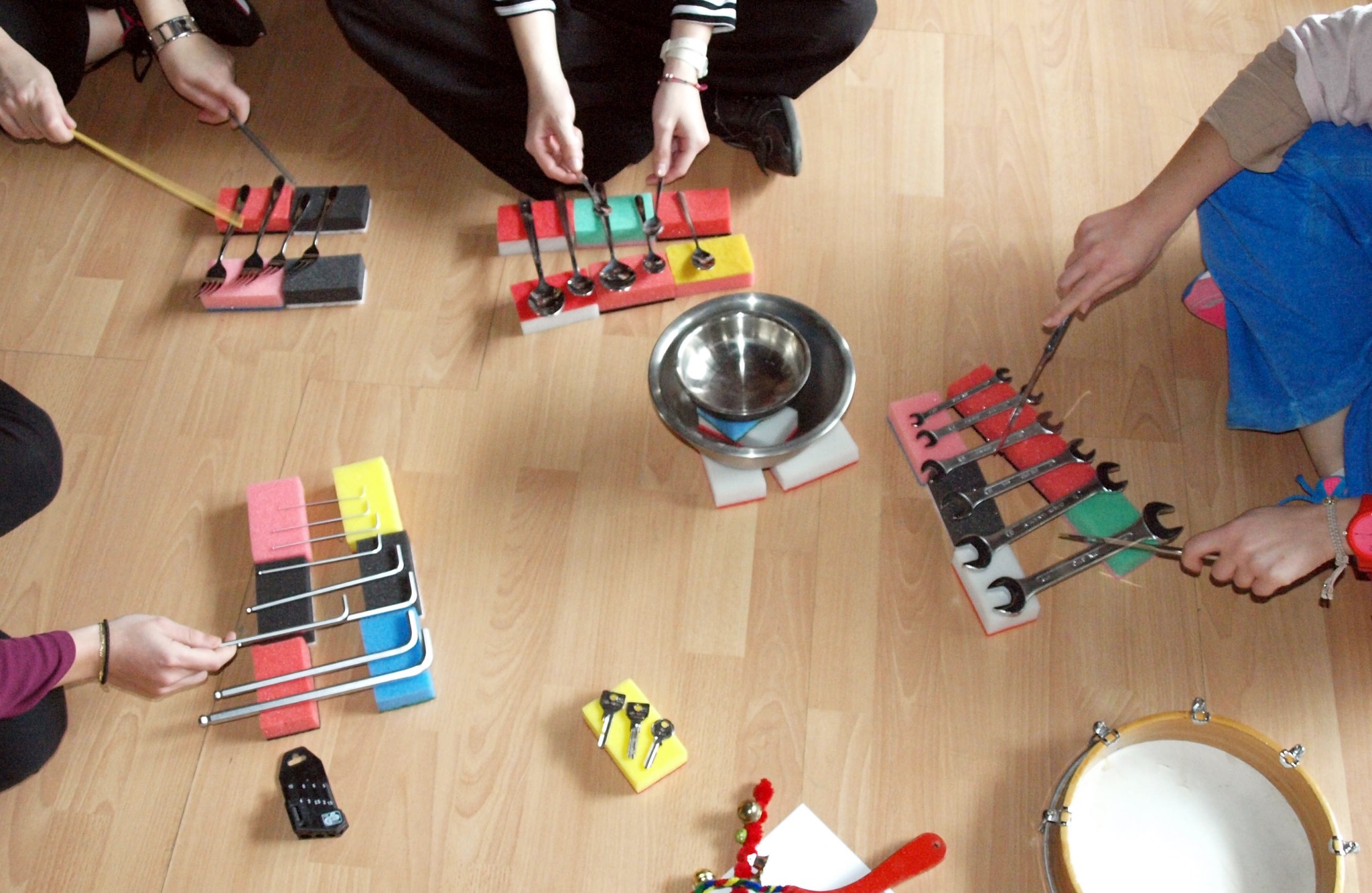
Students use everyday objects (pencils, paper, bottles, etc.) to create a short rhythmic piece. They experiment with how their techniques — holding, tapping, or striking — affect speed, sound quality, and pitch.
Trigger the Sound:
Each student chooses a sound source and decides what action “activates” it — opening a door, shaking a bottle, moving a chair — to explore cause and effect in sound. What makes a sound easier or harder to control?
400. From Music to Sound
We study the cultural shift “from music to sound,” discovering how our civilization listens, composes, and expresses itself today.
Listening Beyond Music:
The teacher plays a short non-musical soundscape (e.g., city, forest, factory) and asks students to describe it as if it were a musical composition. What emotions, rhythms, or patterns do they perceive?
Reimagined Music:
Students choose a simple song and replace traditional instruments with found sounds from their environment, creating a new sonic version of the piece.
500. Exploring Sound, Environment, and Humanity
We delve into the ecologies of sound, understanding the deep relationship between sound, nature, and human presence.
Soundwalk:
The class walks silently around the school or nearby park, noticing how natural and human-made sounds interact. Are these sounds parts of human or natural ecosystems? How do these ecosystems meet and influence each other?
Eco-Sound Story:
In groups, students create a short story in which each environmental sound represents a living being or element of nature. The story is performed using only sounds.
600. Using Sound Technologies Critically and Creatively
We engage thoughtfully with electronic and digital tools, using them to expand our creative and educational sound practices.
Sound Remix:
Students record three everyday sounds and use a simple app (such as Audacity or GarageBand) to remix them into a new “sound artwork.”
Tech Reflection:
Students compare a natural sound (e.g., birdsong) with its digital version (recorded, filtered, or looped) and discuss how its meaning and feeling change through technology.
700. Experiencing the Polis of Sounds
We investigate how sound shapes societies and cultures, exploring its social, political, and civic dimensions.
City Sound Map:
Students draw a map of their neighborhood and mark key sound sources — voices, traffic, bells, markets, etc. How do citizens experience the sounds that shape their community? How do they take care of their neighborhood’s soundscape?
Civic Sound Debate:
Discuss together: Which sounds in our town should be protected, and which should be reduced? Students share their opinions respectfully and justify their views.
800. Creating with Sound
We compose sound creations and sound artworks, transforming ideas and emotions into artistic acoustic expression.
Sound Collage:
Students collect recorded or imitated sounds and combine them to tell a story, a poem, or an emotional journey.
Acoustic Sculpture:
Using recycled materials, students design small objects that produce or modify sound, and present their creations to the class, explaining how they work and what inspired them.
900. Expanding Knowledge Through Interdisciplinary Collaboration
We extend our understanding of sound through the dialogue of sciences, arts, and technologies in shared educational projects.
STEAM Sound Project:
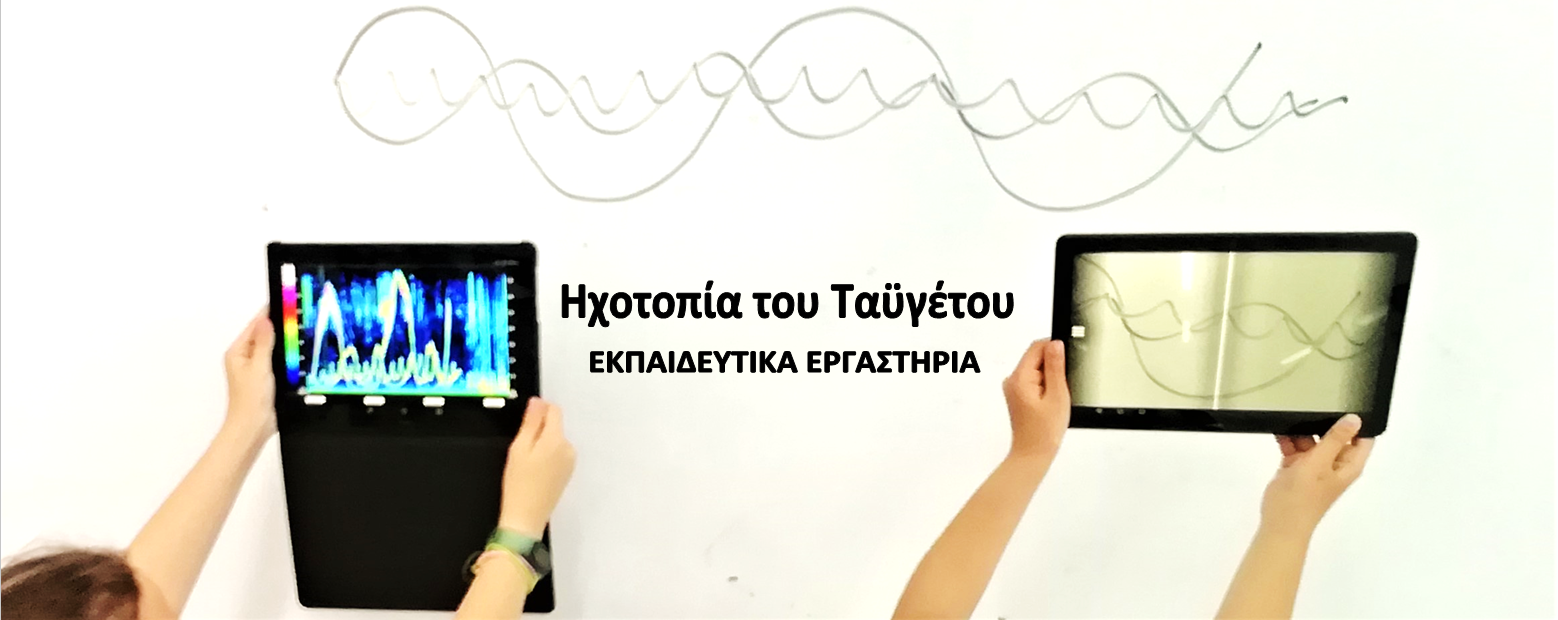
Combine science and art: create a visual representation of sound waves and connect it with musical vibration or resonance phenomena.
Collaborative Sound Exhibition:
Collaborate with other classes (e.g., art or science) to organize a small exhibition with sound installations, posters, and explanations of each project.
More About I.N.S.E.
What is I.N.S.E.
The International Network for Sound in Education (I.N.S.E.), established in 2018, arose from the necessity of teachers, academics and scientists from all over the world to share ideas and discuss the subject of “Sound in Education.” The initial model of this Network came from a national network that has been operating in Greece since 2014. This model connects academic researchers to school communities by opening communication paths between Primary-Secondary Education (Schools) and Higher Education (Universities). The coordinating institution of both networks is the Directory of Primary Education of Messinia.
I.N.S.E. aims to:
~ Develop an international network of scientists working with sound in the realm of education
~ Develop an international network of schools with educational activities related to sound
~ Build an online library of works from scientists related to “Sound Work” addressed in education
~ Publish a scientific journal on “Sound in Education,” in addition to a Scientific Committee and Editorial Board
~ Develop training activities for teachers on subjects related to “Sound in Education.”
Indicative Thematic Fields of I.N.S.E. are:
~ Aural and Acoustic Education
~ Critical Hearing – Anthropology of Education and Sound
~ Disabilities, Sound and Education
~ Education, Hearing and Acoustic Cultures
~ I.C.T., Sound and Education
~ Media, Sound and Education
~ Music, Sound and Education
~ School and Acoustic Environments
~ Sound, Critical Education and Critical Literacy
~ Sound in Teaching Subjects
~ Sound and Acoustic Literacy
~ Sound and Movement in Education
~ Sound and School Activities
~ other related topics.
History and Timeline:
In May of 2018, I.N.S.E. officially began welcoming participants from all over the world via letters and online invitations. This includes the official online presentation/invitation at inse.sch.gr. Contact us if you are interested, by sending an email to inse@sch.gr.
Towards the end of September of 2018, following communications with all of the founding participants over the summer, the first official statutes and framework will be announced. There are plans to organize a “Sound in Education Week” in Kalamata, which will focus on international school-to-school and teacher-to-teacher training and self-developmental communication.
Following this initiative, this Network might organize many further activities. These include: online training, seminars and webinars, conferences and e-conferences, journals, publications and media productions.
I.N.S.E.’s previous work includes taking part in the experience and activities of the “Sound: Environment, Human, Culture” program of the National Scientific Educational Network. Through this project, authorized by the Hellenic Ministry of Education, Research and Religious Affairs, more than forty academic staff members from Greek universities were able to connect with Greek schools and teachers. Other projects put forth by this national network include: “Education that Focuses on Sound” and “Transparent Flags: Flags that Indicate Quality Sound Environments.”
Photo Gallery